
Wireless power technology feels ordinary when the device is a phone. Set it on a pad, watch the charging symbol appear, and move on. A kitchen appliance changes the question. Motors, heaters, controls, cookware, spills, heat, and repeated daily use demand a very different system.
Kitchenery’s patented wireless power technology is designed for that harder problem. It connects the Quantum Energy Pad with compatible receiver-enabled appliances, allowing the appliance to operate without a direct power cord or rechargeable battery.
The technology is protected by U.S. Patent No. 12,603,526 B1, titled “Hybrid wireless power device and method,” granted April 14, 2026. A patent is not proof that a consumer product is finished or certified, but it is evidence that Kitchenery has developed and protected a distinct technical architecture.
What is wireless power transfer?
Wireless power transfer, or WPT, moves energy across a small physical gap without a plug connection at the appliance. In Kitchenery’s platform, the Quantum Energy Pad contains the transmitter side of the system. A compatible appliance contains the receiver side.
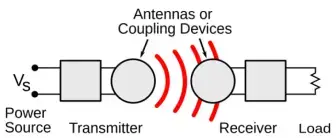
When the appliance is correctly positioned and recognized, an alternating magnetic field couples the two sides. The receiver captures that energy and converts it into usable appliance power. The consumer sees a product on a clean surface. Underneath, the transmitter, receiver, controls, communication, thermal design, and protection behavior have to work together.
How energy crosses the gap
- The Quantum Energy Pad is connected to household power and enters a ready state.
- A compatible Kitchenery appliance is placed on the active area.
- The surface and appliance communicate to identify the connected product and operating mode.
- The transmitter creates a controlled magnetic field that couples with the appliance receiver.
- The receiver converts the transferred energy into the electrical form required by the appliance, while the system monitors operation.

What Kitchenery’s hybrid patent describes
Kitchenery’s patent describes a hybrid wireless power device and method built around a transmission architecture that can operate at different resonant frequencies. In plain English, the surface is designed to support more than one kind of energy task from a shared platform.
Kitchenery QEP can do Inductive Heating + Cordless Power Transfer.
Induction cooktops use electromagnetic induction to directly heat ferromagnetic cookware. An alternating current passes through the QEP’s induction coil beneath the glass surface, creating a time-varying magnetic field. When compatible cookware (cast iron, magnetic stainless steel) is placed on the surface, this field induces eddy currents within the cookware base. The resistance of the cookware material to these eddy currents produces heat through I²R losses, which then cooks the food.

The public patent and Kitchenery materials describe three potential functions:
- Powering compatible receiver-enabled appliances.
- Supporting induction heating for induction-compatible cookware.
- Supporting compatible device-charging functions within the hybrid architecture.
The commercial Kickstarter story is centered on the first two experiences: cordless Kitchenery appliances and induction-compatible cookware. Product-specific functionality depends on final configuration, compatibility, testing, and certification. The patent should not be interpreted as a claim that every possible function will be enabled in every launch unit.
Why battery-free matters
“Cordless” often means that the cord has been replaced by a battery. Kitchenery is pursuing a different architecture. The appliance receives power when it is on the QEP, so the product does not need an internal rechargeable battery for operation.
That choice avoids routine charging and removes a component that adds weight and loses capacity over time. It also changes the product-design problem. The engineering team must create a reliable power relationship between the surface and appliance, manage alignment and communication, and ensure the product behaves correctly when it is placed, operated, or removed.
Why this is not simply phone charging at a larger size
The analogy is useful for understanding the concept but incomplete for understanding the product. A phone charger replenishes a battery over time. Kitchenery’s appliances need operating power in real time for heating, motor movement, controls, and changing loads.
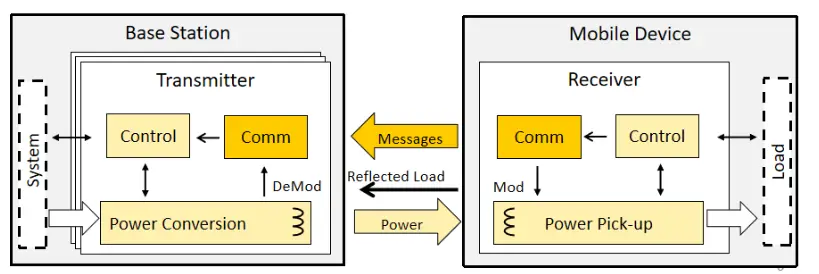
That recognition and control layer is essential. Kitchenery is not claiming that any electrical product can be placed on the pad. The appliance must be designed for the platform, with receiver hardware, controls, mechanical integration, and thermal behavior appropriate to that product.
Kitchen products also face environmental and user-experience demands that do not exist on a nightstand: heat, liquid, food residue, vibration, cookware variation, repeated lifting, cleaning, and the need to stop predictably when a product is removed or a fault is detected. That is why Kitchenery’s public-safe technical explanation emphasizes compatible products, recognition, monitoring, validation, and product-specific integration.
How Kitchenery fits into the wider cordless-kitchen movement
Kitchenery is not the only organization that sees a cordless-kitchen future. The Wireless Power Consortium—the organization behind Qi phone charging—has released the Ki Cordless Kitchen standard. The consortium describes Ki as a platform for low power kitchen appliances without power cables.
That industry activity validates the category-level need: appliance makers and technology companies are investing in shared cordless kitchen power. Kitchenery’s architecture is its own patented approach. Unless a product has completed the relevant certification process, Kitchenery should not describe it as Ki-certified. The honest comparison is that both efforts address the same broader consumer desire: place a compatible appliance on a power surface and use it without an appliance cord.
What a granted patent means—and what it does not
For a Kickstarter backer, the patent matters for three reasons. It shows that Kitchenery’s core idea has been documented in technical detail. It gives the company an intellectual-property asset around its architecture. And it supports the long-term platform strategy, including potential integration with appliance brands and manufacturers.
A patent does not guarantee product performance, safety certification, manufacturing quality, market demand, or delivery. Those outcomes depend on engineering execution. Kitchenery still has to validate the production design, complete compliance work, control suppliers, manufacture repeatably, and support customers after delivery.
From a patent to a product ecosystem
The Quantum Energy Pad is the transmitter platform. The Perfect Pour Kettle and Silent Blender are the first receiver-enabled appliances. Together, they turn the patent from an abstract diagram into a visible consumer experience: set down a compatible product, let the system recognize it, and operate from one shared surface.
The larger opportunity is a cordless appliance ecosystem. Future products can be designed around the same power layer, while brands and manufacturers may explore receiver integration for their own product roadmaps. Kitchenery’s public technology materials describe support from early concept and architecture through prototyping, validation planning, and commercialization discussions.
Why Kickstarter is part of the technology story
The patent protects an architecture; Kickstarter helps test whether customers want the products built around it. Backer demand informs bundle planning, production quantities, and the order in which the ecosystem should expand. Campaign updates also create a public record of how the company moves from prototype to production.
The current estimated delivery for Kitchenery hardware rewards is December 2026—before Christmas. It remains an estimate. Technical validation, certification, supplier execution, production, and logistics must support that schedule.
Frequently asked questions
Is Kitchenery wireless power the same as Qi phone charging?
The basic principle of magnetic coupling is related, but Kitchenery’s architecture is designed for appliance-level operation, compatible product recognition, monitoring, controls, and induction use cases.
Does any appliance work on the QEP?
No. The appliance must contain Kitchenery-compatible receiver and control technology.
Does WPC-Ki use Kitchenery technology?
Kitchenery QEP leverages an advanced BLE-based real-time communication and power-delivery architecture for the cordless kitchen category, whereas Ki is based on a legacy NFC-based slotted communication protocol.
Does the patent prove the final product is ready?
No. A patent protects an invention. Product readiness requires validation, certification, manufacturing controls, and successful production execution.
When is delivery expected?
The current estimate is December 2026—before Christmas. Backers should follow official campaign updates for changes.
The real promise: make the power layer disappear
The best technology eventually feels less like technology. Kitchenery’s goal is not to make the user think about resonant frequencies, receiver modules, or control architecture every morning. It is to let the user set down a compatible kettle or blender, begin, and enjoy a countertop with less visible friction.
Explore Kitchenery’s Kickstarter early access and see how the patented platform becomes a complete cordless kitchen ecosystem. |